



When you think about nature’s wonders, small birds with long beaks instantly stand out. These tiny creatures carry beaks longer than their bodies, giving them a look that feels almost magical. Birdwatchers love spotting small birds with long beaks because they feed in unique ways, reaching nectar deep in flowers or catching insects no other bird can touch.
From the hummingbird to the sunbird, small birds with long beaks show us how amazing adaptations can be. Whether hovering over blossoms or probing the forest floor, small birds with long beaks reveal just how creative evolution can get.
Sword-billed Hummingbird (Ensifera ensifera)

The Sword-billed Hummingbird is perhaps the most famous of all small birds with long beaks, and for good reason. Its beak is longer than its body, making it a marvel among hummingbirds and one of the top birds on lists like A-Z Animals’ 10 Birds with the Longest Beaks. This elongated beak allows it to reach deep flowers that other birds cannot access, feeding mainly on nectar while also helping with insects and small amphibians. Its feeding strategy is a perfect example of evolution at work.
The Sword-billed Hummingbird also shows impressive agility. It hovers precisely over a flower, extending its beak and using its tongue to extract nectar while avoiding competition from other birds. Its behavior has fascinated both birdwatchers and scientists, who note that this species plays a vital ecological role by pollinating plants that rely on specialized feeders. Compared to larger Storks and Pelicans that use pouches or Spoonbills that are filtering water, the Sword-billed Hummingbird proves that being small-bodied does not limit the impact of a long beak.
Cerulean Kingfisher (Alcedo coerulescens)
The vivid Cerulean Kingfisher is another remarkable species among small birds with long beaks. Its striking blue feathers contrast beautifully with its sharp, elongated beak, perfectly designed for catching fish and other small aquatic prey. Unlike the Sword-billed Hummingbird, which hovers over flowers, the Kingfisher dives from perches to capture fish, using precise timing and speed. Its feeding strategy demonstrates how body and beak shape behavior, allowing it to thrive in rivers and streams where other birds might struggle to hunt efficiently.
In addition to hunting, the Cerulean Kingfisher uses its beak for probing under rocks and leaves to find insects. Birdwatchers often find it in pairs or small groups, and its alert behavior makes it an exciting species to observe. While it shares some ecological similarities with other long-beaked birds like the Whimbrel or Bar-tailed Godwit, its tiny size and agility set it apart. Its habitat and feeding habits also show how even small birds can have long and highly specialized beaks that define their survival strategies.
Slender-billed Scimitar Babbler (Pomatorhinus superciliaris)
The Slender-billed Scimitar Babbler uses its elegantly curved beak to explore leaf litter and bark for hidden insects and larvae. Despite being small-bodied, it demonstrates the precision and power of birds with long bills. The babbler thrives in dense forests, where its specialized beak is essential for probing into crevices and reaching food sources that other birds cannot. Its morphology, from slender body to curved bill, exemplifies the close connection between form and feeding behavior.
Beyond feeding, this species is social and vocal, often moving in small groups while foraging. Observing a Slender-billed Scimitar Babbler in action reveals fascinating strategies, such as cooperative feeding and alert responses to predators. Like other small birds with extraordinary bills, including the Little Spiderhunter and Eastern Spinebill, it shows that even tiny birds can master the art of survival with specialized beaks.
Little Spiderhunter (Arachnothera longirostra)
The Little Spiderhunter earns its name for its thin, elongated beak, perfect for capturing spiders and extracting nectar from tubular flowers. This small-bodied bird relies on its long beak to feed efficiently while staying light and agile. Birdwatchers note its preference for moving quickly through shrubs, showing how body and beak coordinate in a strategy that combines speed with precision.
Unlike larger Spoonbills or Storks that sift water or use expandable pouches, the Little Spiderhunter is a master of precision. Its feeding behavior demonstrates the ecological importance of long bills in small birds, allowing it to reach food that would otherwise remain out of reach. Watching it maneuver through flowers or probe leaf litter offers an intimate glimpse into the world of birds where beak length directly impacts survival.
Also Read This: Flightless Birds Facts for Kids
Eastern Spinebill (Acanthorhynchus tenuirostris)
The Eastern Spinebill features a delicate, curved beak that perfectly fits its feeding needs. It primarily feeds on nectar but also catches small insects, demonstrating the versatility of long-billed birds. Its body is compact, allowing it to hover around flowers while extending its beak into narrow tubes. This feeding strategy also benefits plants, as the Spinebill acts as a pollinator, transferring pollen from flower to flower.
During observation, the Eastern Spinebill shows remarkable agility and behavior, darting among blossoms and defending feeding territories. Unlike larger birds such as the Toco Toucan or Eurasian Curlew, which rely on size to hunt or filtering, this small bird with a long beak uses finesse. Its combination of body, beak, and speed makes it a fascinating subject for birdwatchers and a standout among the USA’s avian enthusiasts.
Mountain Velvetbreast (Lafresnaya lafresnayi)
High in mountainous regions, the Mountain Velvetbreast dazzles with iridescent plumage and a long beak adapted for extracting nectar. It demonstrates the specialized lifestyle of small birds with long beaks, balancing feeding, flight, and territorial defense. Its body and beak proportions allow it to access flowers at high altitudes that are unreachable by other birds, highlighting the precision and evolution of these tiny feeders.
This species also exhibits unique behavior, such as hovering mid-air to sip nectar and occasionally capturing small insects for protein. Birdwatchers appreciate the Mountain Velvetbreast for its vibrant colors and active feeding displays. Its role in pollination underscores the ecological significance of long beaks in small birds, even when compared to larger species like Pelicans or Spoonbills that use their bills differently.
Greater Double-collared Sunbird (Cinnyris afer)
The Greater Double-collared Sunbird is one of the most beautiful small birds with long beaks, with metallic green plumage and a moderately long beak. It feeds mainly on nectar, but its diet also includes insects, showing versatility in its feeding strategy. Its body size allows for swift flight between flowers, while its beak reaches into blossoms other birds cannot. Like other sunbirds, it plays an important role in pollination, supporting a variety of plant species.
These sunbirds are territorial and active throughout the day. Their behavior includes rapid hovering, chasing competitors, and sometimes displaying to attract mates. Observing a Greater Double-collared Sunbird highlights the delicate balance between body, beak, and behavior that defines all small birds with long beaks, whether they are Loten’s Sunbird, Little Spiderhunter, or Violet Sabrewing.
Short-tailed Scimitar Babbler (Napothera danjoui)

The Short-tailed Scimitar Babbler combines a curved beak with a small, agile body, making it a master of probing for insects and larvae in leaf litter. Unlike larger long-billed birds like the Eurasian Curlew or Red-billed Scythebill, this babbler thrives in dense undergrowth where precision is essential. Its feeding strategy relies heavily on its long beak, allowing it to access hidden food and survive in competitive forest environments.
This species is social, often moving in small flocks while foraging. Its behavior, including calls, group coordination, and alertness, demonstrates how small-bodied birds with long beaks adapt to forest life. Watching a Short-tailed Scimitar Babbler gives insight into the evolutionary significance of beak morphology in tiny birds with specialized diets.
Loten’s Sunbird (Cinnyris lotenius)
The Loten’s Sunbird exhibits a slender, slightly curved beak perfect for sipping nectar and occasionally catching insects. Its bright plumage and active behavior make it a delight to observe. Like the Greater Double-collared Sunbird or Mountain Velvetbreast, it uses its long beak to reach food sources inaccessible to other birds. Its feeding strategy, body shape, and agility demonstrate how small birds evolve to survive in specialized habitats.
Loten’s Sunbird is a key pollinator, linking its survival directly to plant reproduction. Birdwatchers often spot it visiting gardens and forest edges, where its beak allows it to access deep flowers. Observing it reveals the delicate interplay between body, behavior, and feeding habits, and why small birds with long beaks continue to fascinate enthusiasts across the USA and the world.
Why Small Birds with Long Beaks Fascinate Birdwatchers
Small birds with long beaks are not just visually striking; they demonstrate evolution in action. Their beaks, whether curved, slender, or elongated, allow them to probe, filter, or catch insects, showing unique feeding strategies that larger birds like Storks, Pelicans, and Spoonbills use differently. Observing these birds reveals how body, beak, and behavior combine to meet ecological needs, from pollination to pest control.
Birdwatchers find fascination in the diversity of small-bodied long-beaked birds, including Sword-billed Hummingbird, Little Spiderhunter, and Violet Sabrewing, each adapted to its habitat and diet. Understanding their morphology, habits, and ecological role deepens appreciation for avian life and shows why these tiny creatures with disproportionately long beaks remain a symbol of nature’s ingenuity.
FAQs
What is the name of the small bird with a long beak?
The Sword-billed Hummingbird is a well-known small bird with a very long beak.
What bird has a real long beak?
The Sword-billed Hummingbird also has the longest beak relative to its body among all birds.
What bird looks like a toucan?
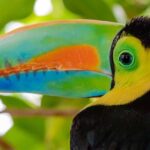
The Toco Toucan looks like a classic toucan with a large colorful beak and black-and-white body.
Conclusion
Watching small birds with long beaks is always a special experience. These birds show how nature can be clever. Their long beaks help them reach nectar, catch insects, and explore places other birds cannot. Birdwatchers in the USA and everywhere must pay attention to their unique feeding habits.
If you want to enjoy the beauty of birds, you must look for small birds with long beaks. They are active, colorful, and fascinating. Learning about small birds with long beaks teaches us patience and wonder. Every birdwatcher must try to see them in the wild.

Spiritual Vora shares deep insights on dreams, angel numbers, spiritual meanings, and inner healing. Our mission is to guide souls toward clarity, growth, and divine connection through uplifting and enlightening content.