



The rainforest is full of wonders, but few shine brighter than the King Bird of Paradise. When people search for King Bird of Paradise Facts, they often want to know why this tiny bird is so famous. The answer is simple: its colors, its dances, and its beauty make it one of the most stunning creatures on Earth.
If you love nature, then learning King Bird of Paradise Facts will surprise you. These birds may be small, but they have big personalities. From their scarlet feathers to their courtship dances, every detail adds more amazing King Bird of Paradise Facts to discover.
Meet the King Bird of Paradise

The King Bird of Paradise has earned its place as one of nature’s most dazzling creations. Known scientifically as Cicinnurus regius, this tiny bird is often described as a living jewel because of its unmatched brilliance and beauty. Among the family of birds-of-paradise, which includes around 44 species in the Paradisaeidae family, the king bird is not only the smallest but also one of the most remarkable. Its striking look, rare behavior, and fascinating lifestyle make it an extraordinary creature that sparks curiosity across the world.
When people first encounter this bird, they are stunned by its incredible plumage and delicate size. In the wild, it appears almost unreal, glowing like a drop of scarlet fire in the dense forests of New Guinea. For those in the USA who may never travel to Indonesia or eastern Australia, the king bird remains a rare wonder. Even so, through stories, photos, and research, this little marvel inspires the same kind of excitement that spotting a hummingbird or cardinal brings closer to home.
Where Does the King Bird of Paradise Live?
The King Bird of Paradise’s home lies in the lush forests of New Guinea and several surrounding islands. It lives mostly high in the canopy, a place that is very difficult to reach or even see from the ground. This makes observing the bird in the wild a true challenge for researchers and bird enthusiasts. Unlike birds in America that often perch on backyard feeders, this species stays hidden, weaving through branches in areas where the forest is at its thickest.
Though New Guinea is the main stronghold of the species, its range also extends into parts of Indonesia and some edges of eastern Australia. These places, filled with tropical vegetation, provide exactly what the bird needs: fruiting trees, insects, and high nesting spots. Its choice of habitat shows how perfectly it has adapted to an environment that allows it to remain safe from predators while continuing its breathtaking displays.
How Small Is This Tiny Bird of Paradise?
The king bird is the smallest of all its relatives. Measuring only around six to seven inches long, it’s shorter than an average pencil and lighter than a smartphone. Its petite size contributes to its charm, but it also means the bird depends heavily on the shelter and resources of the canopy. While other birds-of-paradise may reach impressive lengths due to elaborate tails, this one keeps things delicate and compact, making it the true miniature gem of the family.
To put this into perspective, imagine holding a sparrow in your hand; the King Bird of Paradise feels even lighter. Despite its size, it carries remarkable details in its body design, from its radiant feathers to its long wiry tails. This balance of tiny frame and luxurious ornamentation is what sets it apart from nearly every other tropical bird species.
The Dazzling Colors of the King Bird of Paradise
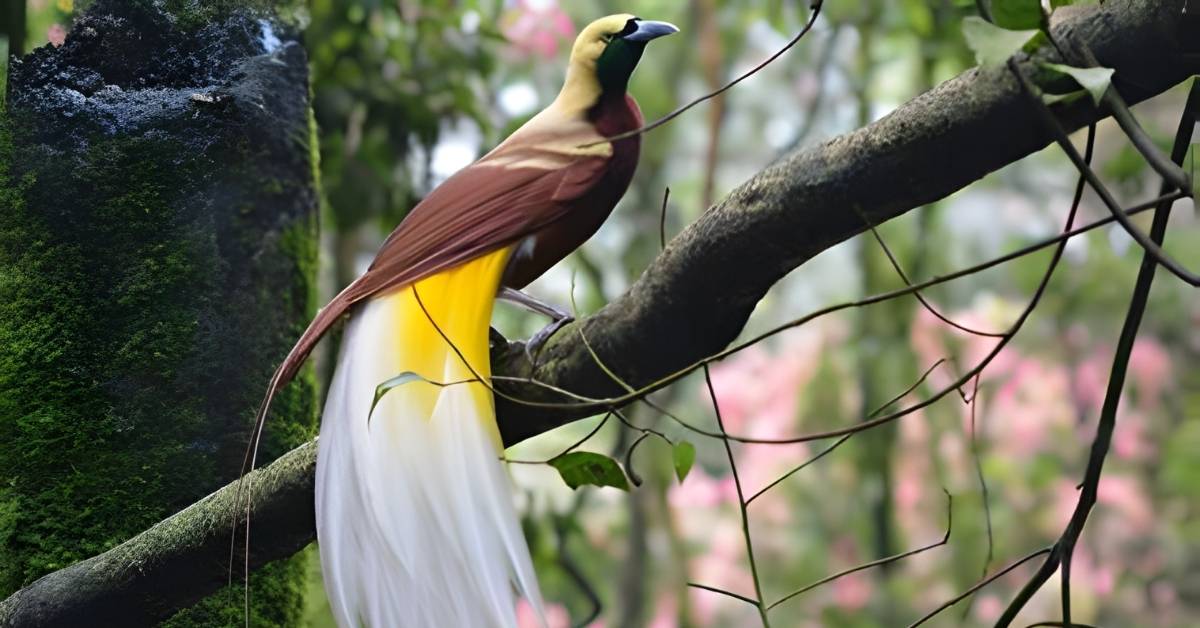
What really captures attention is its extraordinary appearance. The male boasts a vivid scarlet and red coat with glowing plumes, bright blue feet, and shimmering green tail disks that end in unique circular feathers. Add to this its shoulder fans and white belly, which can be puffed out like cotton, and you see why it’s one of the most admired birds in the world. These vibrant designs are not random; they serve a powerful purpose during courtship displays.
The female, in contrast, shows more drab tones. With cryptic coloration of browns and soft grays, she relies on camouflage while nesting. While not as flamboyant as the male, her simpler look plays a survival role, keeping her and her chicks safe from predators. This dramatic difference between sexes, called sexual dimorphism, is one of the key identifying traits of the King Bird of Paradise.
Also Read This: King of Saxony Bird of Paradise Fact
What Do King Birds of Paradise Eat?
The diet of the King Bird of Paradise may sound simple, but it plays a vital role in the rainforest. These birds eat a combination of fruit and insects, which provides them with the energy needed for their elaborate performances and constant movement. Fruits help them distribute seeds across the forest floor, making them crucial for maintaining the health of their environment. By feeding on insects, they also help control insect populations, balancing the ecosystem in quiet but powerful ways.
Their feeding habits are not random. The birds often position themselves on treetop perches where they can quickly pluck fruit or snatch insects mid-flight. While an American robin might remind you of this fruit-eating behavior, the King Bird of Paradise adds elegance to the act, staying almost invisible in the canopy until it’s brilliant colors flash in the sunlight.
Why Are Their Tail Wires So Special?
The King Bird of Paradise is instantly recognizable for its wiry tail feathers that end in iridescent green disks. These tail wires are unlike anything seen in most other bird species. Their purpose goes beyond beauty; they are tools for communication during displays, catching sunlight and flickering like jewels in the air. In effect, the tail wires are stage lights for the bird’s performance, highlighting every twist and turn of its dances.
Much like the grand tail of a peacock, the King Bird of Paradise’s tail is all about showmanship. Yet, being small, it makes use of delicate wires instead of heavy feathers. This design is lighter, allows more freedom of movement, and proves highly effective in dazzling female birds. Scientists believe these unique features evolved through centuries of female preference, shaping the species into one of the most visually distinct animals on earth.
How Females Choose Their Mates
In this species, the power of choice rests with the female. While males put on grand shows of color and movement, the female quietly observes. She will only mate with the bird whose display shows the greatest energy, brightest feathers, and most perfect moves. This selective process is a textbook example of how sexual selection works in nature.
You can think of it as a talent audition, where only the best performer moves to the next stage. Over time, this constant judging by females ensures that every generation of King Birds of Paradise is as brilliant, colorful, and athletic as possible. This is one reason why the species has kept its jewel-like qualities intact for centuries.
Conservation Status-Is the King Bird of Paradise Endangered?
When it comes to conservation, the King Bird of Paradise is not yet classified as endangered, but it faces real threats. Large-scale deforestation in New Guinea and surrounding areas continues to shrink the forests where it lives. Climate change adds to the problem, shifting ecosystems and food availability. Beyond that, in the past, the bird’s feathers were sought after for decoration, leading to hunting and collection.
There is even an anecdote from 2009 when a museum in Europe suffered a theft involving hundreds of rare bird specimens, including several birds-of-paradise. The feathers were later found to be intended for making salmon fly lures. Stories like these show how prized and rare these birds are, and why conservation is crucial. Although the King Bird of Paradise is still stable today, protection of rainforests remains essential to secure its future.
Fun Facts About the World’s Smallest Bird of Paradise

The King Bird of Paradise is full of surprises. During displays, the male looks like a tiny ball of cotton leaping through branches, a sight that always brings smiles to observers. It proudly holds the title of the smallest of all birds-of-paradise, making it both delicate and impressive at the same time. In the wild, it is rarely spotted because it lives high in the canopy, hidden from most human eyes.
In the past, the bird’s stunning feathers made it a target for collectors, especially during the Victorian era. Today, it continues to enchant scientists and nature lovers alike, showing that beauty in the natural world often comes in small packages. For those curious about bird wonders beyond their own backyard, learning about the King Bird of Paradise offers a window into the incredible diversity and mystery of tropical wildlife.
FAQs
What are some interesting facts about the bird of paradise?
Birds of paradise are famous for bright colors, unusual plumage, and dramatic courtship dances. There are about 44 species, and most live in New Guinea.
What makes the King Bird of Paradise unique?
It is the smallest bird of paradise, only about 6–7 inches long. The male has scarlet feathers, blue feet, and wiry green tail disks that it uses in dance displays.
What is the king of the bird of paradise?
The King Bird of Paradise (Cicinnurus regius) holds this title. It is called “king” because of its jewel-like beauty and remarkable displays.
Conclusion
Exploring King Bird of Paradise Facts shows us just how special this tiny bird really is. Every part of its life is amazing. Its scarlet feathers shine like fire. Its green tail disks sparkle in the trees. Its dances look like moving art. People who read about King Bird of Paradise Facts quickly see why it is called nature’s jewel.
There are still many King Bird of Paradise Facts to learn. These birds live high in the rainforest canopy, safe but hard to see. They eat fruit and insects, helping the forest grow. They are rare and beautiful. Learning more King Bird of Paradise Facts helps us protect them for the future.

Spiritual Vora shares deep insights on dreams, angel numbers, spiritual meanings, and inner healing. Our mission is to guide souls toward clarity, growth, and divine connection through uplifting and enlightening content.